Caleb Wilde
(218 comments, 980 posts)
Posts by Caleb Wilde
10 SUPERPOWERS FUNERAL DIRECTORS (and caretakers/service personnel) NEED RIGHT NOW
If you’re in death care (or any type of caretaker position, paid or unpaid), you probably already have these superpowers. In fact, most of us only know how to use our superpowers for others, but we hardly ever use them for ourselves. As we all face this pandemic and the unknowns that come with it, we’ll have to focus our superpowers outwardly towards others AND inwardly towards ourselves. Otherwise, we’ll burn out. Or worse.
SELF COMPASSION
We have an abundance of compassion. We practice it every time we walk into a home for a home removal, every time we meet with grieving families, and every time we direct a funeral. But, we’re too often like the five-star chef who makes unimaginably good and healthy food for her customers but will only allow herself to eat the scraps.
Just like we give compassion to the bereaved, it’s okay to give it to ourselves because the chef can make wonderful food and eat it too.
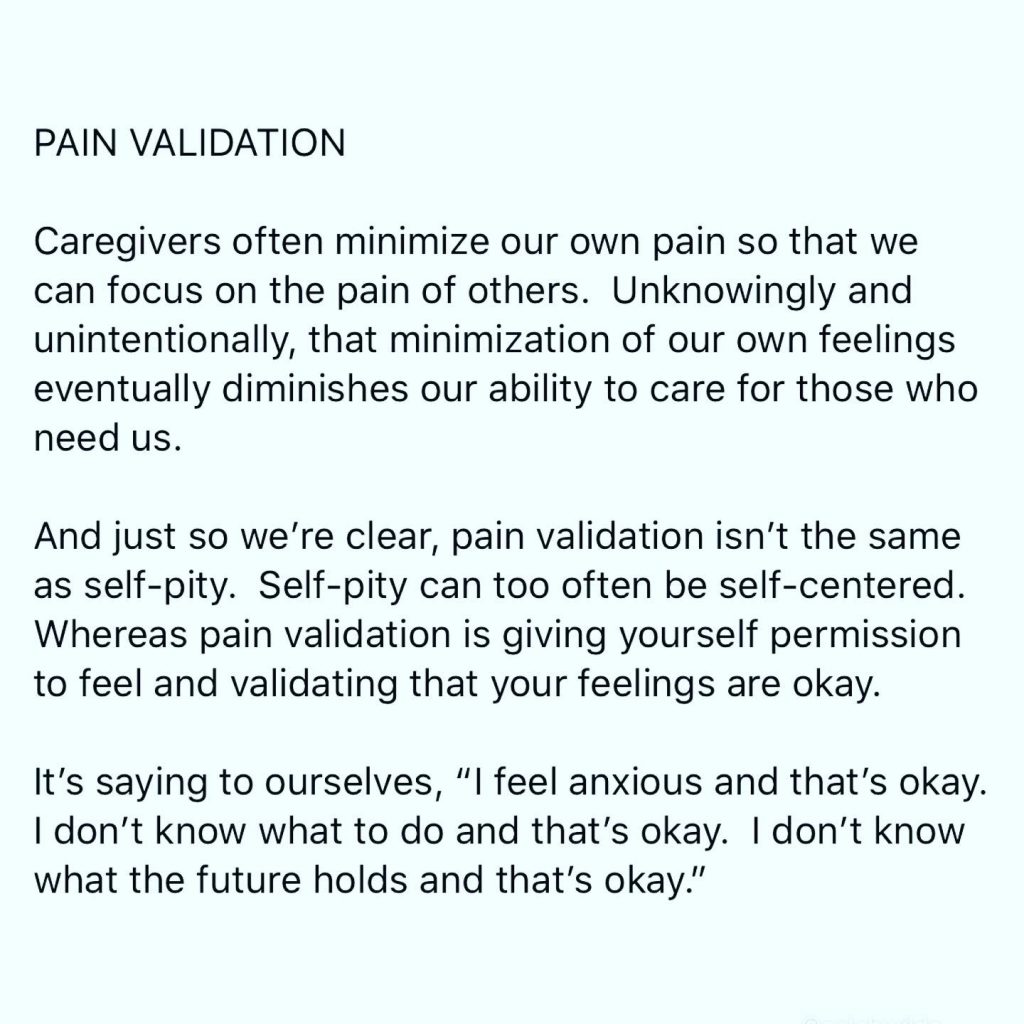
PAIN VALIDATION
Caregivers often minimize our own pain so that we can focus on the pain of others. Unknowingly and unintentionally, that minimization of our own feelings eventually diminishes our ability to care for those who need us.
And just so we’re clear, pain validation isn’t the same as self-pity. Self-pity can too often be self-centered. Whereas pain validation is giving yourself permission to feel and validating that your feelings are okay.
It’s saying to ourselves, “I feel anxious and that’s okay. I don’t know what to do and that’s okay. I don’t know what the future holds and that’s okay.”
TWO-WAY HONEST COMMUNICATION
When we meet with families, we want to hear their honest stories. We invite them to tell us what’s happened so we can feel their feelings, know their thoughts. Yet, we usually hide our own feelings because we’re supposed to be the strong ones. Right now, THERE ARE NO STRONG ONES.
When we’re talking with families, don’t try to be the strong one. More than ever, we need to show our own humanity, even if we’ve repressed it for so long in an attempt to serve others. It’s okay if we tell people that we’re afraid for our families too. It’s okay if we make policies at the funeral home that protect us as well. Right now, your superpower isn’t being Superman, it’s being honest.
STRESS MANAGEMENT PERSPECTIVES
For millennials specifically, transparency and vulnerability with our stress are considered brave. For older generations, keeping our problems and stress private (or ignoring them entirely) is viewed as brave. These two perspectives on stress management aren’t always generational. Some millennials hold to the PRIVACY = GOOD STRESS MANAGEMENT while some gen-xers, boomers and older hold to the TRANSPARENCY = GOOD STRESS MANAGEMENT view.
What matters, however, isn’t the generational differences, it’s that we try to understand each other.
FAMILY DYNAMICS
I sometimes jokingly tell people that the reason they pay me is because I can navigate and mediate their family disfunction. Even though it’s a joke, it’s often true. Funeral directors are good mediators except … except with it comes to their own work-family.
Did you know that a large percentage of stress for funeral service workers is caused by their bosses and co-workers? It’s because we don’t understand our own stress management perspective and we don’t understand the stress management perspective of others. It’s because many of us are burnt out and we transfer our anger, our bitterness, and our pain onto those we deem weaker than us … our employees and our coworkers. Managers and owners … I’m looking at you. This is often your problem. And you need to acknowledge your own shortcomings if you’re going to make it through the next couple of months.
SAFE SPACE CREATION
I work really hard to create an environment at the funeral home to make people feel safe. Safe to share their wants and needs. Safe to cry and express their emotions. And safe to acknowledge their loss.
We need to find that space for ourselves too. We need to find people who allow us to talk it out (just so you talk it out with at least six feet of space between you). If we’re the funeral home manager or owner, you need to create such a safe space for your employees. Your business is dependent upon their mental health. So act like it.
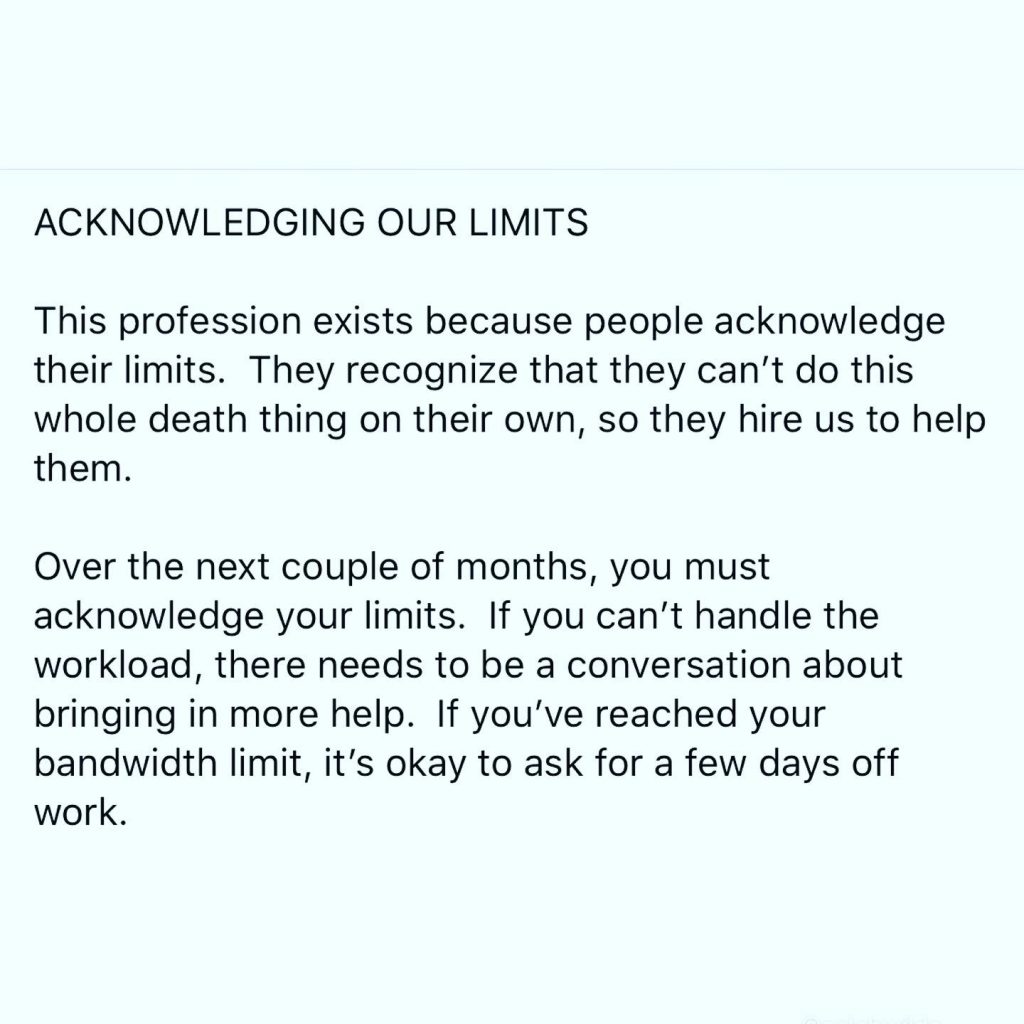
ACKNOWLEDGING OUR LIMITS
This profession exists because people acknowledge their limits. They recognize that they can’t do this whole death thing on their own, so they hire us to help them.
Over the next couple of months, you must acknowledge your limits. If you can’t handle the workload, there needs to be a conversation about bringing in more help. If you’ve reached your bandwidth limit, it’s okay to ask for a few days off work.
WORK WITH IT, NOT AROUND IT.
For most of my career, I’ve been ashamed of my depression, of the thoughts that bombard my mind. Ashamed that I spend SO MUCH energy trying to keep myself upright that I have so little energy left for others. Ashamed that I’m not and will never be entirely stable. But over the last couple of years, I’ve started to make a change in how I approach depression. Grammatically, it’s a simple change in a preposition. Here’s the change: for most of my career, I tried to work AROUND my depression, but recently I’m trying to work WITH it.
You may not deal with depression, but these next couple of months may bring you close to it. Don’t try to act like nothing’s wrong. Don’t try to act like everything will be okay. Instead, acknowledge it and work WITH it. Because the greatest superpower you may have in the coming months is being able to empathize with others and you’ll only do that when you acknowledge your own fear, your own depression, and your own worry.
SELF-CARE
Let’s not confuse self-care with selfishness. Let’s not confuse self-care with self-centeredness. Self-care is one of the most loving things you can do moving forward. The person who doesn’t practice self-care is like the chef who not only doesn’t eat their wonderful food, they eat horribly unhealthy food that will eventually cause health problems and the inability to work at all. Self-care is acknowledging that my own health is vital for the health of others. You can be your best at other-care only when you practice self-care.
LEAN ON ME
… when you’re not strong.
It’s okay to lean on those you love. Please, don’t come home from work all burnt out and yell at your kids and your loved ones. Please, don’t come home from work and isolate yourself from those in your home. Lean on the ones you love. Ask them for help. Tell them what’s happening. Because you can’t do this on your own. No matter how much self-compassion and self-care you practice, we need each other.
I need you. We all need you.
Death Care Isn’t Entirely Prepared for COVID-19
Nearly two weeks ago, our funeral home was notified of the death of a 47-year-old woman named Diane (both the name and circumstances have been changed to protect privacy). After talking with Diane’s daughter, I scheduled the family to come into the funeral home the following day at 2 PM to make funeral arrangements. On cue, Diane’s husband, mother and two high school-aged daughters were standing at our funeral home’s porch at 2 PM waiting for me to open the door.
Her family was exhausted. I could see it in their faces. As I would come to find out, Diane’s aneurysm was unexpected and sudden. She was standing in the doorway of her home, told her husband she felt weird and collapsed immediately after. The EMTs kept her alive and for a few days and many more tests, they all sat vigilantly by her hospital bed waiting to find out if this was her end or the beginning of a long recovery process. After they received their answer, they were also by her side when the ventilator was removed.
When I meet with families that are grieving a sudden and tragic death, I try to prepare myself for the trauma and pain I’m going to witness. Secondary trauma is what EMTs, ER staff, police, and, yes, death care workers experience when we step into someone else’s tragedy. Secondary trauma is never as intense as it is for primary recipients, but over time secondary trauma can build itself into burnout, compassion fatigue, depression, and even PTSD, all of which I and many in my profession hide beneath the suits. Secondary trauma is the quiet trauma held by caregivers like myself. We often minimize our own pain so that we can focus on the pain of others. Unknowingly and unintentionally, that minimization of our own feelings eventually diminishes our ability to care for those who need us.
The day before Diane was removed from her ventilator, the CDC issued their recommendation that gatherings of no more than 50 people should take place. Diane’s funeral arrangements were the first I would make since the CDC’s recommendation and I wasn’t exactly sure how I was going to address that recommendation when many people in my area still believed COVID-19 to be no worse than the flu.
I opened the funeral home’s door and sat them down in our conference area. After I listened to the family tell Diane’s story for over a half an hour, I felt like I had gained enough of their trust to talk about the CDC’s recommendation. I paused. Took a deep breath and said,
“I know you guys have been in the hospital for the last couple of days and you may not have been following the news, but the Coronavirus has become a legitimate public threat. The CDC suggests no public gatherings over 50 people.”
They all looked at me, trying to decide if I was really brazen enough to follow through with my line of thinking.
I continued, “I’m recommending that you have a private service for only your family and intimate friends.”
The reaction on their faces was something I’ve never seen in all my years of serving bereaved families. It was a combination of anger and assertiveness, grief and hopelessness. As I had learned from the stories they had just told me, Diane served in the ladies auxiliary for two local fire companies, she was very involved in her church and helped manage all of her daughters’ sports teams.
“Diane deserves a big sendoff”, her husband responded instinctually. “She was loved by all of us and I need everyone who loved Diane to come together for a funeral.”
I assumed that would be their response and I was prepared to help them have the funeral they wanted. We scheduled it for the following Thursday at Diane’s church. They expected over 500 people to attend the service.
As the days passed leading up to Diane’s funeral, my anxiety grew as I realized the next couple of months will be unlike anything death care workers have seen in our lifetime. It has that same ominous feeling that those of us in Pennsylvania feel when there’s a Nor’easter churning up the coast, leaving high snowdrifts and power outages in its wake. One day the sky is blue, and the sun is bright and the next day the snow is so blinding you can hardly see. You prepare the best you can by buying rock salt, getting the snowplow ready and checking to make sure the generator still works. And then you wait.
Just … wait.
Right now, the COVID-19 Nor’easter is hitting Bergamo, Italy where funeral homes are dealing with five to six times their normal amount of work. They don’t always have room for the bodies. And funerals aren’t even a possibility. There are so many deaths that the obituary section of the Bergamo newspaper has had nine to ten pages compared to their normal one or two. In Spain, the body count is so overwhelming that they’re using an ice rink to help keep the deceased from decomposing.
Soon after the Bergamo reports hit the headlines, people within and without the funeral industry started giving us practical guidance on how we should protect ourselves against COVID-19. The DHS and CISA have labeled death care workers “critical infrastructure workers”. Just as we do for holidays, the middle of the night and any other time death happens, we’ll be prepared to work the entire way through this pandemic.
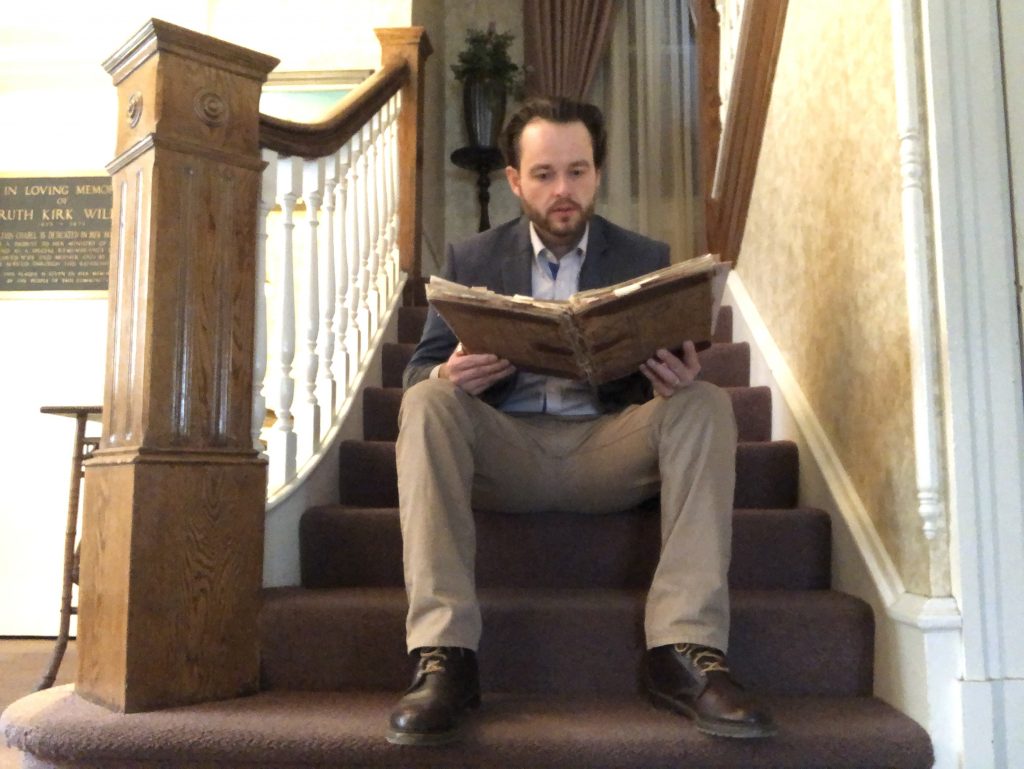
Yesterday, I pulled out our funeral home’s contract book from 100 years ago. Back then, my great grandfather, James Wilde, was serving about 35 bereaved families a year. That average was consistent until 1918 when the Spanish Influenza tripled the average to exactly 100 deceased persons. At the time, 100 bodies maxed out our funeral home’s capacity, but it didn’t overload it. Today, we serve approximately 300 families each year. If that number is tripled like it was in 1918 we will simply have no place to store 900 bodies. Like Italy and now Spain, we will have to improvise.
Last week I purchased an extra refrigerated storage unit, a new removal cot, and extra body bags. Like that Nor’easter, however, if the snow is too deep, creates too much damage, and our best-made plans become overwhelmed, we always find a way to get through it. Just like those of us in the northeast who have to deal with unpredictable weather, funeral directors are a creative and resilient group of people.
An overwhelming body count isn’t what scares me the most. This is more than one-dimensional preparation. And because our preparation is only one-dimensional, that’s why I say we’re not entirely prepared.
I’ve yet to hear anyone talk about the potential burnout for our industry and for the many others caregivers that will be affected. Burnout can be equally as dangerous and crippling to our health as COVID-19 itself. Many of us are already burnt out and dealing with an unhealthy mental state. I know I myself have dealt with suicidal ideation and major bouts with depression throughout my career. The fact is that caregivers are rarely good at taking care of themselves. We’re like the five-star chef who makes unimaginably good food for her customers but will only allow herself to eat the scraps.
Two days before Diane’s funeral was to take place, her husband called. “I don’t want to, but I’m going to make this funeral private”, he said. “I can’t put the people who loved her at risk. We’re gonna cancel the public service. I don’t want her friends and family to have to choose between honoring Diane and putting their health at risk.” As I listened to him and tried to affirm him, I have to admit that it was hard to hear him grieve over lost grief. It was a foretaste of things to come. We won’t just be witnessing an overwhelming amount of tragic deaths, we’ll be witnessing people who are grieving the loss of communal grieving.
My wife and I have been preparing our eight and two-year-old kids for the potentiality that I could contract COVID-19. I told them that this pandemic will likely affect us, maybe even affect those we love who are at most risk. I told them that Daddy is still working and I will do my best to stay healthy, but I could very well be exposed to the sickness. I told them that they’ll need to be leaders going forward, ready to take on some more house responsibilities in case Daddy has to rest a few days. And just like I’ve enlisted my own children to help me in case I need it, I implore funeral homes to start enlisting capable women and men who can help them because we will need it!
As those of us in funeral service have seen time and again, when things fall apart, people find an untapped capacity for generosity and kindness. That’s what I want from us in death care and health care. The families we work for need the best from us. If we can start a conversation about burnout and self-care now, we can have generosity later. Caregivers can care for others and care for themselves too. We must care for ourselves.
It’s very likely that the funeral industry in the United States will be overwhelmed in the coming months, especially if our leaders continue to be so reluctant to take preventative measures. While the industry might be overwhelmed, I’d like to believe if we can talk about the psychological impact this will have on us now, we can find ways to keep ourselves together. While our facilities may be overwhelmed, I’d like to believe that we don’t have to be.
“I don’t want anyone to know I have cancer”
Every time I write a story, I always change names, circumstances, and any identifying factors. This story — like most others — is less about “Dan” and more about what he taught me.

The funeral home’s business line rang and — in my normal fashion — I answered, “Hello. Wilde Funeral Home. Caleb speaking.”
“Hi, Caleb. My name is Dan,” the voice on the other end said, in what sounded like the voice of someone in their mid-forties.
“I want to know the cost of cremation”, he said.
“Sure, Dan. Let’s make sure we’re on the same page. When you say ‘cremation’, are you thinking about having a memorial service, is there a burial involved? I’m asking these questions because it’ll help me give you a more specific answer.”
“Hmmm. Good questions. And I don’t really know to be honest.”
“I’ll need to talk to my husband about that”, he said.
“Is your husband sick, or dying?” I asked as a way to move our conversation away from a purely business exchange and into something a little more personal. Usually, I try to personalize everything I do in this business. I try to understand relationships, personalities, likes/dislikes, all for the purpose of being able to serve that specific person better.
Dan paused to roll his answer around in his head.
“It’s for me. I’m dying. I have a very rare form of cancer that’s incurable. Supposedly, I have about two to three years left before …. you know … I’ll need your services.”
I could tell by the tone of Dan’s voice that he wasn’t interested in my sympathy, nor did he want me to delve into his personal life. He was interested in talking about cremation pricing. So, that’s what we did.
Toward the end of our conversation, Dan said, “I don’t want anyone to know I have cancer. So let’s pretend this conversation never happened.”
Over the past couple of months, we’ve buried four elderly women who died of breast cancer. And they, like Dan, didn’t tell anyone until they were actively dying. Their family didn’t know. Their friends didn’t know. They kept it to themselves.
I mentioned this to Dan and his response surprised me:
“I don’t think they were quiet because they were ashamed of their cancer. Or because it was so big and bad that they wanted to sweep it under the rug. I think they were quiet because they didn’t want it to shape their entire identity. When I came out as gay, I wasn’t ashamed of being gay, I was more worried that people would stop looking at me as ‘Dan’ and start seeing me as ‘Dan, the gay guy.’ Now, I don’t want people to see me as ‘Dan, the guy with cancer.’ In my last years, I just want to be Dan.”
I’ve been processing my conversation with Dan since I spoke with him a few weeks ago. Labels are powerful. Labels like:
Republican.
Muslim.
Queer.
Whatever label gets attached to you, it often sticks. Some are stronger than others. Some are so strong, they define you. And — if I learned anything from Dan — it’s that labels that are attached to death and dying might be the strongest. Labels like …
Widow.
Suicide.
Bereaved mother.
And cancer.
And maybe why people are often tentative to share those labels … to share their hard stories … is because they want to be enjoyed, not pitied.
I’ve always thought that transparency is an act of bravery. But for some, keeping things to themselves is their own act of bravery. Thanks to Dan, I’ve come to respect both acts.
How I talk about death with Jeremiah
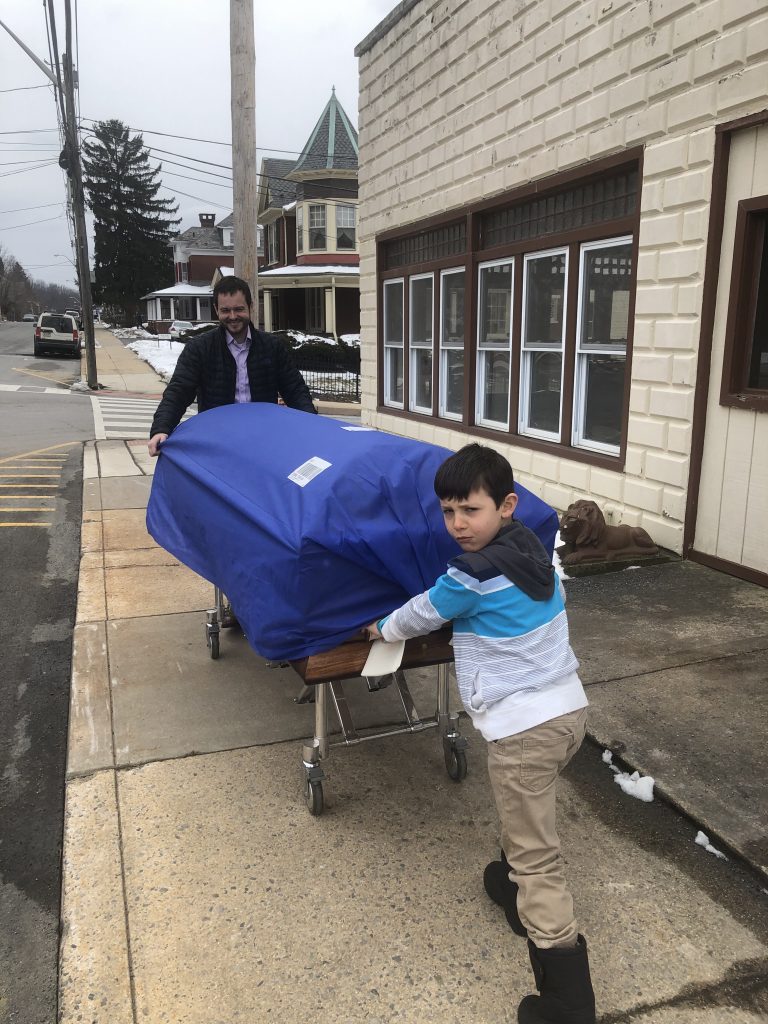
Kids and death. Okay, guys. Here’s how I talk to Jeremiah about death.
I tell him that I don’t have all the answers.
I tell him that it makes me scared too.
And when someone we love inevitably dies, I won’t hide my tears from him.
Because I want to give him permission to cry (and feel anything he needs to feel). And I’ll give him permission by leading by example.
I’ll respect the uniqueness of his grief.
I won’t project my fears onto him.
I won’t project my experience onto his.
I’ll let him experience all his feelings, while reassuring him that I’m there for him if he needs me. . . not as an expert on death or grief, but as a brother in his grief because his love and his grief are just as valid as mine.
I’ll let him decide whether or not he sees the body of the deceased (but I’ll gently encourage him to see it because tough and hard things aren’t the same as bad things).
I talk about death with him now.
I’ve let him know that someday I’ll die and his mom will die, but that every time we love each other a piece of us gets embedded in him.
And I’ll fight — and fight as hard as I can — for his dreams because we only get one shot at life.
I won’t keep his own mortality a secret. I’ll let him know how wonderful and frightening this journey can be, but it’s a journey we can walk together.
I’ll show my love to him as smartly and as often as I can because I know how fast time flies and how short life is.
And I’ll let him move our caskets from our storage garage because pushing caskets down the sidewalk can be weird and fun all at the same time.
Validating my pain
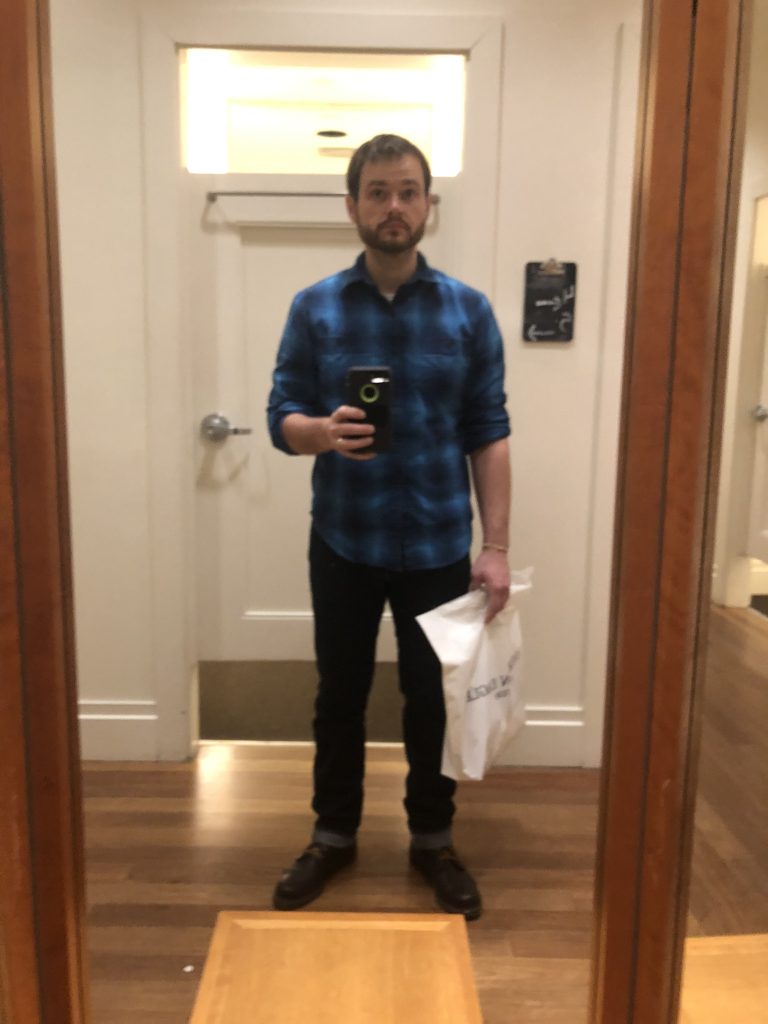
Anyone else have trouble validating their own pain and problems because “there’s always people who have it worse?” 🙋🏻♂️
—
So, I’m riding shotgun with @nicwilde while she tries on new jeans at @express. Those of you who have walked through this valley know this particular challenge. I mean, I totally love my wife, even after the 36th pair of jeans we’ve appraised in the trifold mirror. And if I want something other than pure joy, I’m entitled to that feeling even if nearly one billion people in the world are undernourished.
—
Real talk. I actually love shopping with my wife because she’s lovely and I love spending time with her. Also, it REALLY is hard for me to validate my pain and problems when I constantly see people in more pain than I am. Why do we compare ourselves? Maybe it’s some evolutionary function that has us continually sizing up rivals? I don’t know where it comes from, but I know for a fact that it is hardly ever helpful. Maybe it worked for our evolutionary ancestors, but it doesn’t work for us anymore. It makes us jealous and unhappy and unsatisfied and mean and possessive and inhuman.
—
I’m starting to allow myself to validate my pain. I know there’s people in more pain than me. Believe me, I know. And there’s a bunch of cliche reasons why I’m taking care of me, like: “in an airplane, put your own mask on first” and “it’s selfless to be selfish.” And all those reasons are good. For me — right now— I’m validating my pain because I know I need to get better. I need to be a better husband, father and funeral director. And I think if I validate my pain, I can be better. Because if I validate my pain, I might be able to go another round of 36 jeans.